Windows Defender under control: Live emails for security events with Event Mail Notification
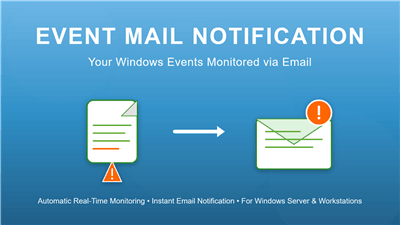
Anyone who relies solely on the Windows log often reacts too late: a detection by Windows Defender, a blocked process, or a failed signature update – all of this reliably appears in the event log, but without active monitoring it triggers no action. This is exactly where Event Mail Notification (EMN) comes in: the application monitors defined Windows event sources in real time and sends immediate email notifications when matches occur – targeted, secure, and without unnecessary noise.
Why EMN instead of “checking later”?
- React immediately: Critical Defender events are reported instantly – e.g. detections, quarantine, blockings, update or engine errors.
- Save costs: No expensive SIEM licenses, no complex log pulling – precise alerts instead of continuous monitoring.
- Create transparency: Each notification is traceable, including source, timestamp, computer name, and message text.
- Flexible scaling: From single PC to server environment – rules per system or centrally administered.
- Low‑spam & targeted: Only what matters – via filters, thresholds, and prioritization.
What is monitored – typical Defender signals
EMN reads the relevant Windows log channels (e.g. Microsoft‑Windows‑Windows Defender/Operational as well as Security/System, if Defender writes there) and checks new entries against your rules. This makes it possible to reliably report, among others, the following cases:
- Malware detected / moved to quarantine
- Action required (e.g. threat not remediated)
- Real-time protection deactivated / modified
- Signature or engine update failed
- Scan results (scheduled/manual)
Advantage: You define exactly what triggers an email – such as only “critical” detections or also hints about configuration changes.
How quickly you set up EMN
- Select source: Add relevant log channels (Windows‑Defender‑Operational, optional Security/System).
- Define rules: Filter by source, event type, severity, message content, or computer name.
- Configure email: SMTP, sender, recipient, subject template (e.g. “[Defender] Detection on %COMPUTERNAME%”).
- Minimize noise: Bundle duplicates, set thresholds, only new/since X minutes.
- Test & go live: Trigger test event, verify delivery – done.
Tip: Use meaningful subject lines and include placeholders like %LEVEL%, %SOURCE%, %MACHINE%, and %MESSAGE%. This makes alerts immediately understandable – ideal for on‑call operations.
Practical examples
- SME with 10 clients: Only “detection/quarantine” and “update failed” are reported – IT saves weekly log checks and reacts within minutes.
- Server operation: Defender status changes (e.g. real‑time protection off) trigger high‑priority emails to the admin team – configuration deviations do not go unnoticed.
- MSP/IT service provider: Client‑specific rules, separate recipients, clear audit trail – fewer blind spots, fewer escalations.
Security & compliance
EMN supports transport encryption (TLS) for SMTP and fits into environments with SPF, DKIM, DMARC. Combined with clear subject/content rules, this creates a verifiable record of when which system reported which security status – a plus for audits.
Result: More security, less effort
With Event Mail Notification, Windows Defender events shift from passive to proactive. Instead of searching later, you now know – in real time. This reduces response times, prevents consequential damage, and saves license and operating costs because you can alert precisely without a heavy SIEM.